
If My Tooth Doesn't Hurt, Is It Healthy? Not Always.
One of the most common misconceptions in dentistry is that if a tooth doesn't hurt, it must be healthy. While pain is often associated with dental problems, many oral diseases begin silently and may not cause any discomfort until they have progressed significantly.

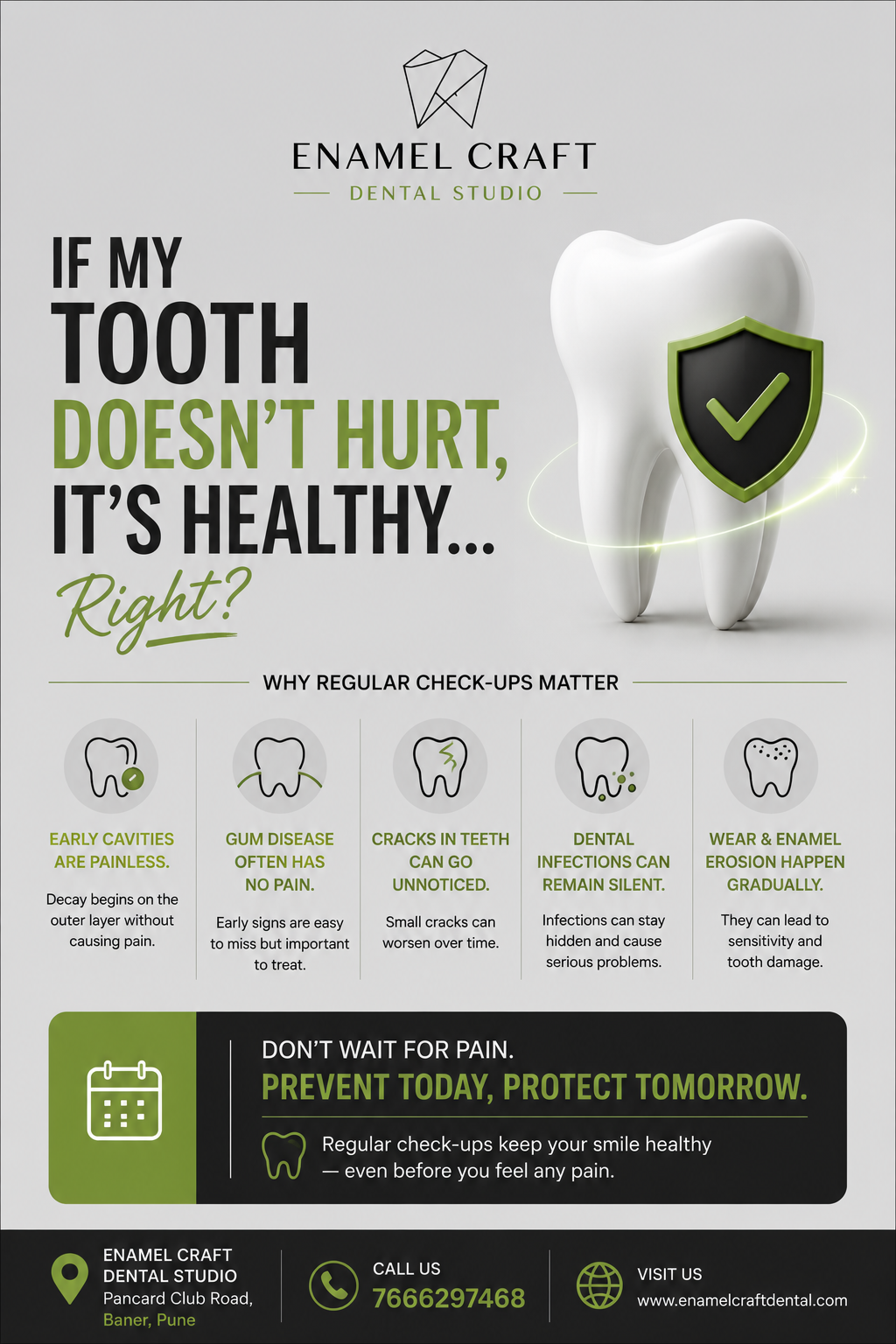
One of the most common misconceptions in dentistry is that if a tooth doesn't hurt, it must be healthy. While pain is often associated with dental problems, many oral diseases begin silently and may not cause any discomfort until they have progressed significantly.
Understanding why this happens can help you seek treatment early and avoid more complex dental procedures in the future.
Why Doesn't a Damaged Tooth Always Hurt?
Pain occurs only when the inner part of the tooth, known as the pulp, becomes inflamed or infected. In the early stages of many dental conditions, the nerves are not affected, so you may not notice any symptoms even though damage is occurring.
Common Dental Problems That Can Be Painless
1. Early Tooth Decay
Cavities usually begin in the enamel, the outer protective layer of the tooth. Since enamel contains no nerves, early decay often develops without pain. By the time discomfort appears, the cavity may have reached the deeper layers of the tooth.
2. Gum Disease
Bleeding gums, swelling, persistent bad breath, or gum recession are often early signs of gum disease. Surprisingly, many patients experience little or no pain until the disease becomes advanced and starts affecting the supporting bone around the teeth.
3. Cracked Teeth
Small cracks caused by biting hard foods, grinding your teeth, or accidental trauma may not hurt immediately. However, these cracks can deepen over time, leading to sensitivity, infection, or even a fractured tooth.
4. Dental Infections
Sometimes an infected tooth causes very little pain, especially if the infection drains through the gums. Although the pressure is reduced, the infection remains and continues to damage the surrounding tissues if left untreated.
5. Enamel Wear
Acidic foods, frequent consumption of soft drinks, and teeth grinding can slowly wear away enamel without causing immediate discomfort. As the protective layer becomes thinner, teeth become more sensitive and vulnerable to decay.
Why Regular Dental Check-ups Matter
Routine dental examinations allow problems to be detected before they become painful or require extensive treatment. Early diagnosis often means smaller fillings instead of root canal treatment, simpler gum care instead of advanced periodontal treatment, and lower treatment costs overall.
Most dentists recommend a dental check-up every six months, although some patients may require more frequent visits depending on their oral health.
Don't Wait for Pain
Pain is not the only indicator of oral health. In many cases, it is the final warning that a problem has already progressed.
Regular preventive dental care helps identify cavities, gum disease, worn teeth, cracked teeth, and other conditions before they become serious. Maintaining regular check-ups is one of the easiest ways to protect your smile and avoid unnecessary complications.
If it's been more than six months since your last dental examination, consider scheduling a preventive dental check-up.
At Enamel Craft Dental Studio in Baner, Pune, we focus on early diagnosis, preventive dentistry, and personalized dental care to help patients maintain healthy smiles for years to come.At Enamel Craft Dental Studio, we believe that prevention is the best treatment. Our comprehensive dental examinations help detect cavities at the earliest stage, allowing for conservative and effective treatment.
Book your appointment today and keep your smile healthy with preventive dental care.
Enamel Craft Dental Studio
Pancard Club Road, Baner, Pune
Book you appointment now- 7666297468
Visit: enamelcraft.in
Specialist in Aesthetic & Microdentist, Best Dentist in Baner & Pancard Club Road